

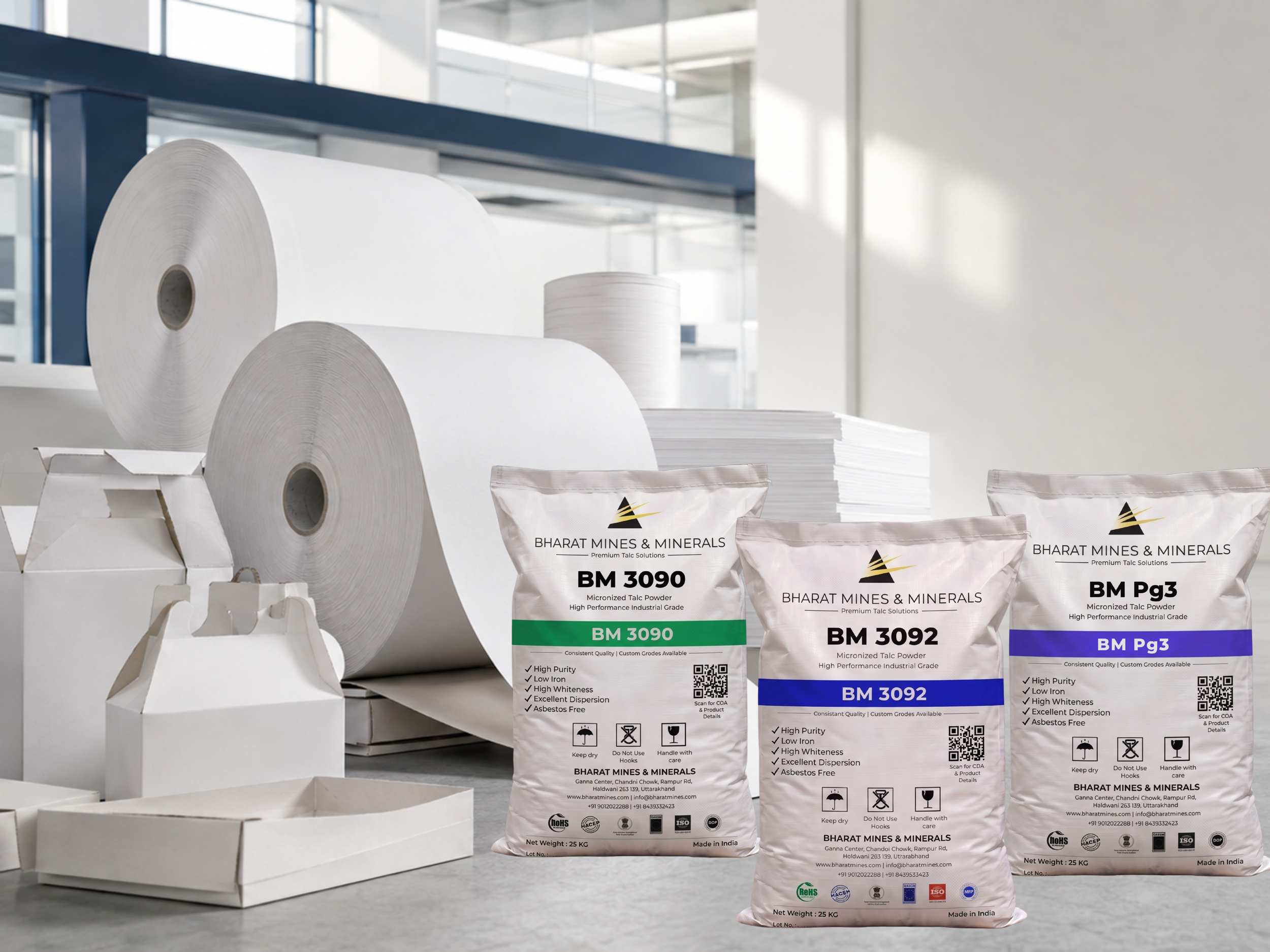
Paper-Grade Talc for Papermaking & Process Applications
PAPER GRADE TALC
Talc powders developed for paper manufacturing and process applications where controlled particle profile, optical balance, process compatibility and consistent mineral characteristics matter.
Paper Manufacturing · Pitch & Stickies Management · Specialty & Process Applications
More than mineral addition. Performance in the paper system.
THE BMM APPROACH
A paper-grade talc is not defined by fineness alone. Mineral character, particle-size distribution, optical properties, surface characteristics and dispersion behaviour all influence the result.
We begin with the furnish, process stage and mill objective. This helps align source selection and processing with deposition control, optical balance, sheet properties and production consistency.
PAPER APPLICATIONS
Start with the paper system. Refine by process.
Share where the talc enters your process and what the paper system or finished sheet needs to achieve.
Functional mineral addition
Candidate talc grades are selected around furnish, loading, optical balance and production requirements.
Evaluate suitable grades →Process-support mineral
In suitable wet-end systems, talc’s organophilic surface may help adsorb hydrophobic contaminants. Performance depends on furnish, chemistry and dosing.
Discuss your mill requirement →Application-led selection
Grade selection begins with the customer’s process, target properties and evaluation criteria.
Compare suitable grades →PAPER-GRADE PORTFOLIO
Paper-grade talc for diverse mill and sheet requirements.
Explore grades differentiated by particle profile, optical characteristics, bulk-density behaviour and intended evaluation priorities. Final selection should be confirmed through laboratory or mill trials under the customer’s actual furnish and process conditions.

Fine-Particle Process Grade
BM Pg3
BM Pg3 is a fine-particle paper-grade talc with balanced optical characteristics and a lower bulk-density profile. It is a practical evaluation starting point for specialty paper, controlled mineral addition and process applications where a finer particle distribution is preferred.
Enhanced-Optical Grade
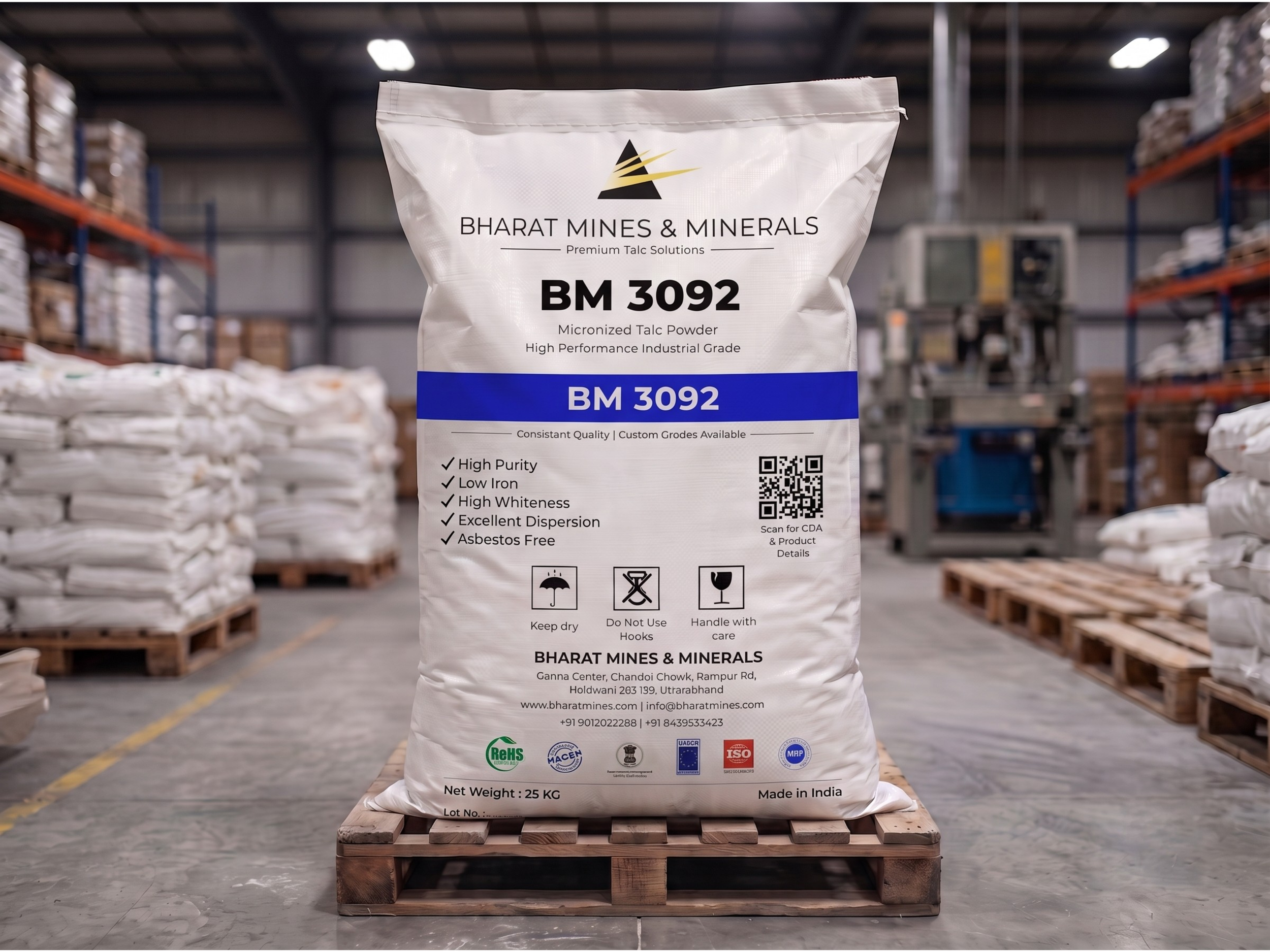
BM 3092
BM 3092 combines enhanced whiteness with a controlled standard particle profile for paper and board systems. It is a suitable evaluation starting point where optical balance, consistent mineral addition and a cleaner sheet appearance are important.

General-Purpose Grade
BM 3090
BM 3090 is a balanced, general-purpose paper-grade talc with a controlled standard particle profile and core optical positioning. It is intended for paper, board and process applications requiring consistent mineral characteristics, dependable supply and mill-side validation.
Compare grades by paper-system priorities.
COMPARE PAPER-GRADE TALC
These categories represent qualitative portfolio positioning. Numerical particle-size, optical, physical and chemical values should be reviewed in the relevant grade documentation and confirmed through laboratory or mill trials.
Swipe horizontally to compare all paper-grade selection criteria.
| Grade | Particle Profile | Optical Positioning | Bulk-Density Family | Suggested Evaluation Starting Point |
|---|---|---|---|---|
| BM Pg3 Fine-particle process grade | Fine | Balanced optical profile | Lower-density | Specialty paper, controlled mineral addition and process applications where a finer particle distribution is preferred. |
| BM 3092 Enhanced-optical grade | Standard | Enhanced-whiteness profile | Higher-density | White and light-coloured paper, paperboard and wet-end filler evaluations where optical balance and cleaner sheet appearance are important. |
| BM 3090 General-purpose grade | Standard | Core optical profile | Higher-density | General-purpose paper, paperboard and process applications requiring consistent mineral characteristics and a commercially balanced starting point. |
These categories represent qualitative portfolio positioning. Numerical particle-size, optical, physical and chemical values should be reviewed in the relevant grade documentation. Final suitability should be confirmed through laboratory or mill trials under the customer’s actual furnish, process chemistry and operating conditions.
A consistent mineral profile supports dependable performance in paper systems.
TYPICAL CHEMICAL PROFILE
The balance of silica and magnesium oxide reflects talc’s characteristic mineral composition. Chemical consistency should be assessed alongside particle-size distribution, morphology, optical properties, moisture, bulk density and performance under actual furnish, wet-end chemistry and mill conditions.
| Parameter | Typical Range |
|---|---|
| Silica — SiO2 | 59–61% |
| Magnesium Oxide — MgO | 28–31% |
| Alumina — Al2O3 | 0–1.0% |
| Iron Oxide — Fe2O3 | 0–0.5% |
| Calcium Carbonate — CaCO3 | 1–2% |
| Loss on Ignition at 900°C | 4–5% |
Values are indicative and may vary by grade. Grade-specific technical specifications and supporting documentation are available on enquiry.
PERFORMANCE FRAMEWORK
Choose the grade around what the paper system must do.
The correct starting point depends on furnish, wet-end chemistry, process stage, dosing and the required balance of properties.
Particle-profile consistency
Controlled sourcing and classification can support repeatable addition, dispersion and processing.
Optical balance
Brightness, whiteness and yellow index are considered alongside the furnish and finished-sheet target.
Pitch-control contribution
In suitable systems, talc may adsorb hydrophobic pitch and stickies and support process stability. Mill trials are essential.
Surface & printability
Particle profile and mineral character are considered alongside smoothness, formation and print-performance targets.
Final paper and process performance depends on furnish, chemistry, dosing, equipment and operating conditions. Grade selection should be confirmed by mill trials and customer evaluation.
MINERAL MORPHOLOGY
Plate-like structure. A controlled starting point.
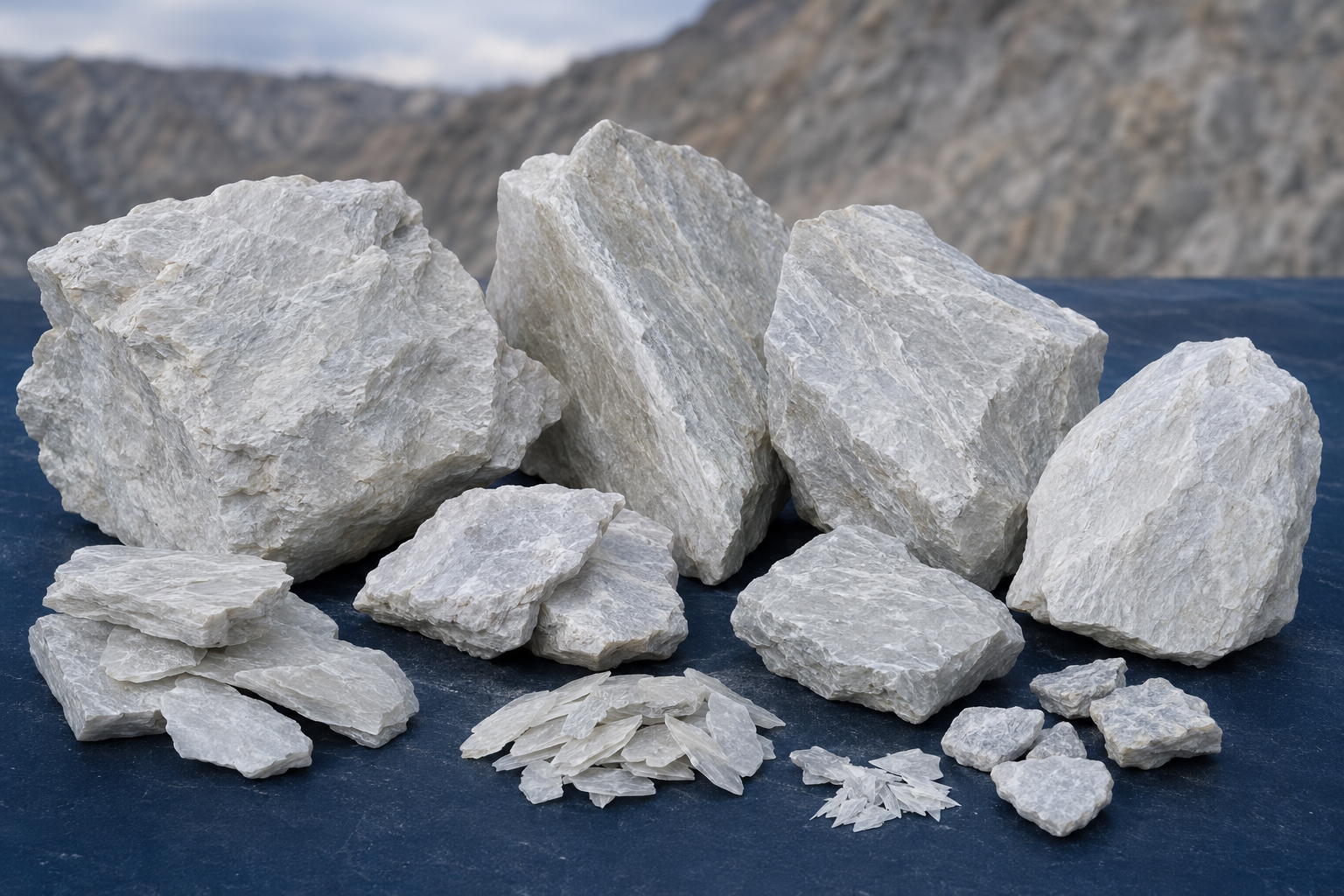
Talc’s layered mineral structure produces plate-like particles and an organophilic surface. In suitable paper systems, mineral morphology and particle profile may influence contaminant adsorption, dispersion and sheet characteristics.
Mineralogy alone does not determine performance. Furnish, wet-end chemistry, dosing, retention, equipment and operating conditions must be considered together.
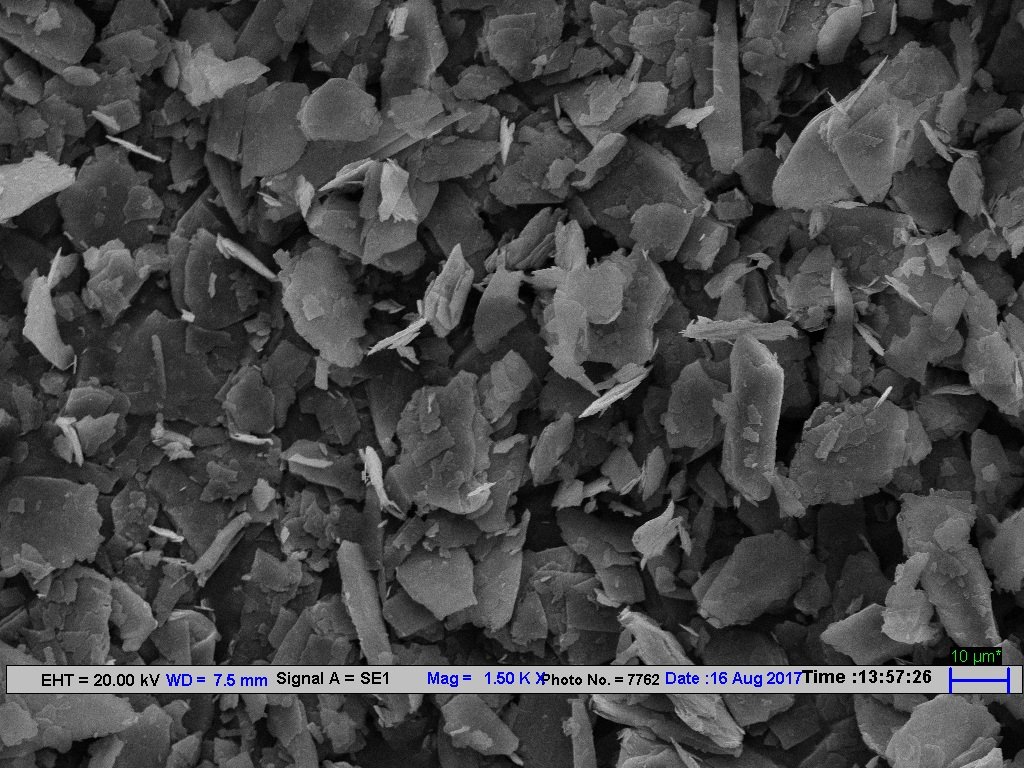
Particle population at lower magnification
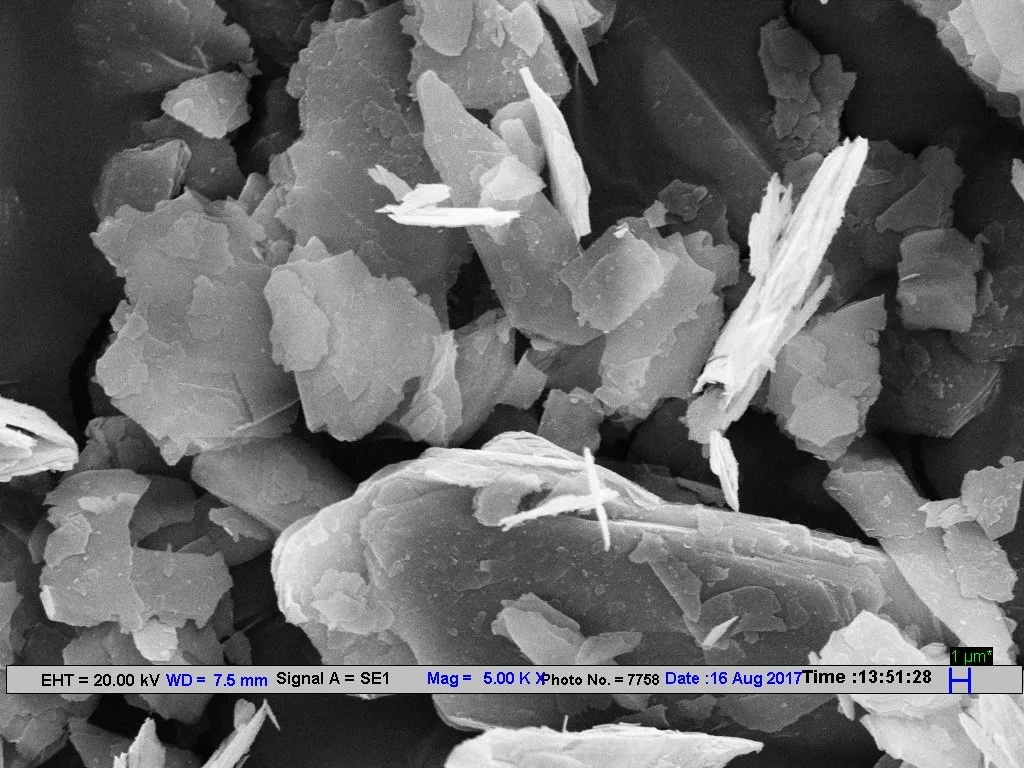
Plate-like morphology at higher magnification
SOURCE TO SPECIFICATION
Uttarakhand / INDIA
Consistency begins before micronisation.
Control over the mineral source gives grade development a dependable starting point.
01
Share the paper type, furnish, process stage, current additive, dosing level and the result you need.
Application first
02
We consider morphology, surface character, optical properties and raw-material consistency—not mesh alone.
Mineral character
03
Particle engineering
Micronisation and classification are aligned with dispersion and process requirements.
04
Shortlisted grades should be validated in the customer’s complete paper process before commercial adoption.
Mill evaluation
TECHNICAL & COMMERCIAL SUPPORT
From shortlist
to supply.
Share your paper process and specification. Our team can support grade discussion, mill-trial evaluation, documentation and supply planning.
Grade discussion
Review the furnish, chemistry, process stage, dosing and target performance.
Samples & evaluation
Shortlist candidate grades for customer-side laboratory or mill trials.
Documentation
Product specifications, TDS, SDS and batch-specific COA support.
Supply planning
Suitable packaging with domestic dispatch and export coordination support.
COMMON QUESTIONS
Before you request a grade.
-
Please share the paper grade, furnish or fibre mix, process stage, current additive, dosing level, issue or target, approximate volume and destination. This gives us a practical starting point for discussion.
-
In suitable wet-end systems, talc may help adsorb hydrophobic contaminants. Results depend on pitch chemistry, furnish, pH, dosing, retention and process conditions, so mill validation is essential.
-
Yes. Candidate grades can be shortlisted for laboratory or mill trials after reviewing the furnish, process stage and target performance.
-
Product specifications, TDS, SDS and batch-specific COA support can be discussed for the selected product and destination.
What should your talc help you achieve?
START A TECHNICAL CONVERSATION
Share your application, current specification, target properties, approximate requirement and destination. Our team will review the information and recommend the appropriate next step.
Product selection · Technical data · Samples · Domestic supply · Export enquiries
SALES & TECHNICAL ENQUIRIES
Ganna Center, Chandni Chowk, Rampur Rd, Haldwani 263 139,
Uttarakhand