

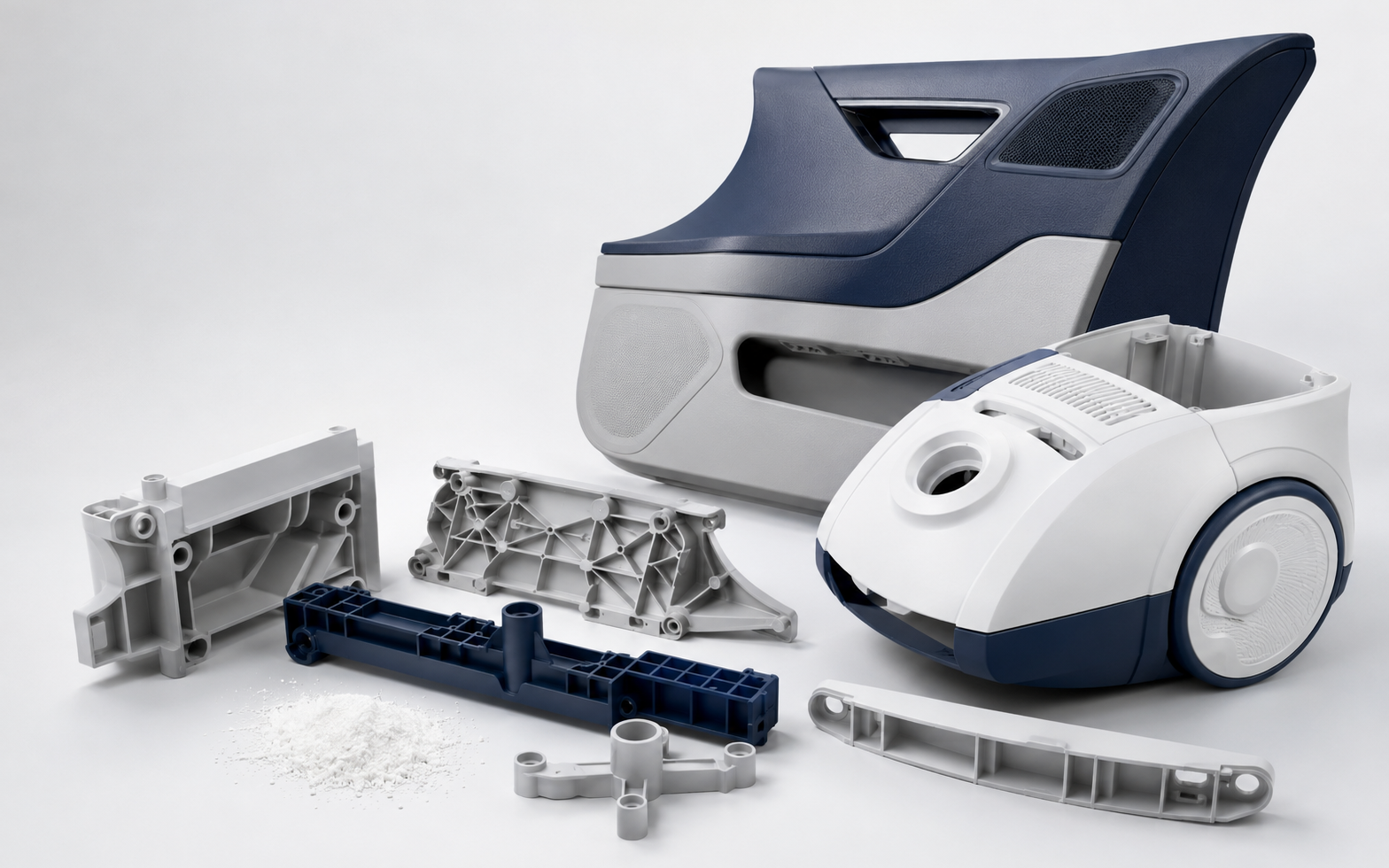
PP COMPOUNDS
Reinforce polypropylene
Engineer the final part.
Micronised talc grades for PP compounders seeking a practical balance of stiffness, dimensional stability, heat performance, surface appearance and reliable processing.
Controlled PSD · Lamellar Morphology · Application-led Selection
WHY TALC IN PP
Four performance levers. One balanced formulation.
Increasing talc loading does not automatically improve the component. The commercial grade must support the required mechanical, dimensional and processing profile together.
Stiffness & rigidity
Platy talc particles reinforce polypropylene and help moulded components retain their intended form under load.
Dimensional stability
A controlled mineral system can support lower mould shrinkage, reduced warpage and more repeatable part dimensions.
Heat performance
Talc can support heat-deflection performance and influence crystallisation when aligned with the resin and process.
Stiffness–impact balance
The right result comes from particle structure and dispersion—not simply maximum loading or the finest available powder.
RECOMMENDED TALC GRADES
Practical starting points for PP compound development.
These positions support initial grade selection. Final approval should follow a controlled compound trial using the intended polymer, additive package, loading and process.

Talc BM 9090
Premium whiteness grade
For light-coloured and appearance-sensitive PP compounds where whiteness, fine dispersion and clean finished-part appearance are important.

Talc BM 9080
Balanced performance grade
Our most versatile starting grade for general-purpose PP compounds requiring a practical balance of stiffness, processing consistency, appearance and economics.

Talc BM 5092A
Cost-effective grade
For value-driven PP compounds where dependable processing, acceptable finished-part performance and price competitiveness are priorities.
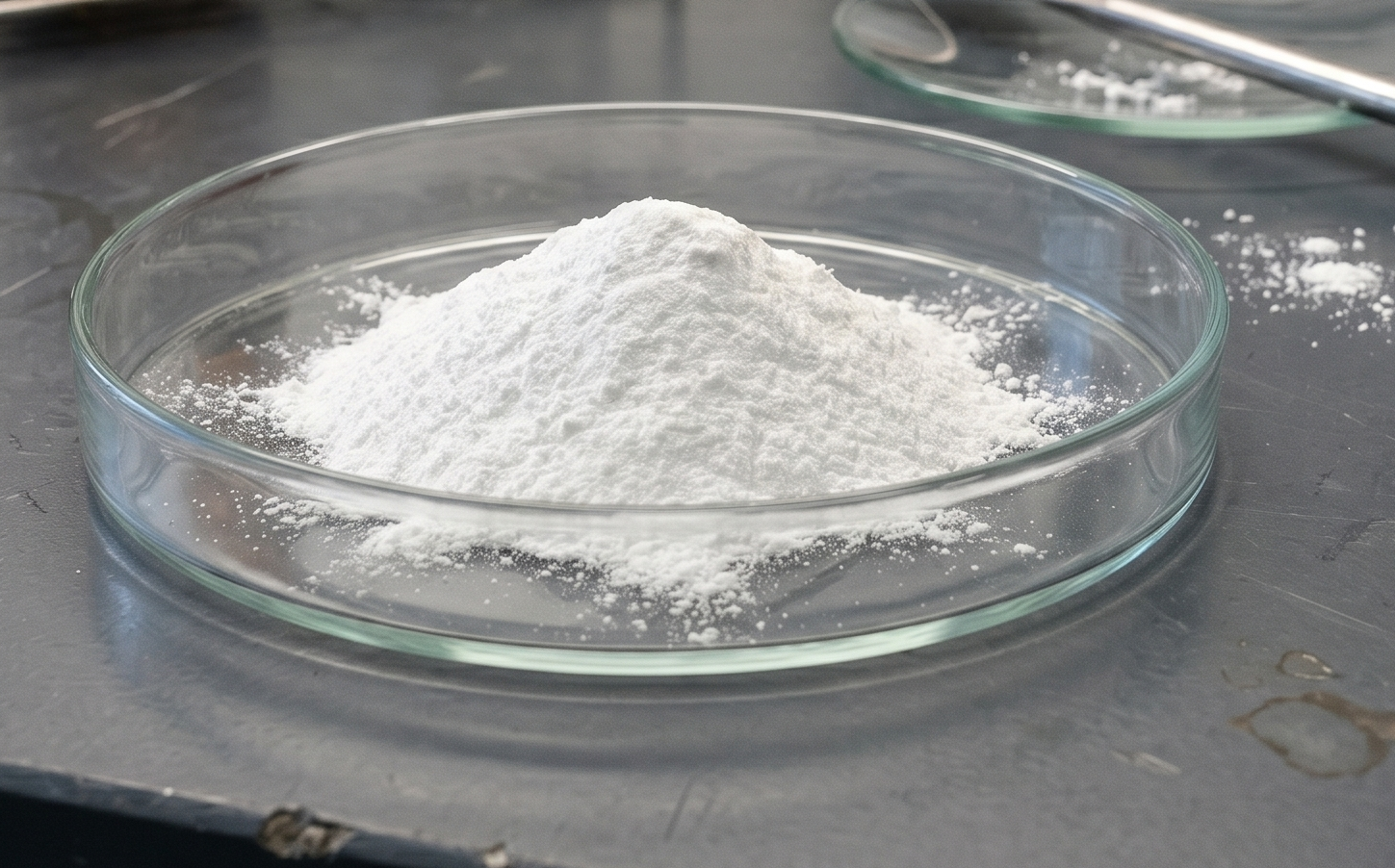
Customised Grades
Built around your formulation
Particle-size distribution, whiteness, oil absorption and chemical profile can be aligned with the PP resin, talc loading, processing conditions and required part performance.
Compare grades for your PP compound requirement.
RECOMMENDED TALC GRADES
Use this table as an initial selection guide. Final approval should follow a controlled compound trial using the intended PP resin, additive package, talc loading, extrusion conditions and moulded-part performance requirements.
| Grade | Best Starting Point For | Position | Compounder Should Evaluate | Next Step |
|---|---|---|---|---|
| BM 9090 Premium whiteness | Light-coloured or appearance-sensitive PP compounds. | Premium | Whiteness, dispersion, compound colour, surface finish, stiffness and impact balance. | Request BM 9090 TDS → |
| BM 9080 Balanced performance | General-purpose virgin, blended or recycled PP compounds requiring a balance of performance, processing and economics. | Balanced | Flexural stiffness, impact performance, extrusion stability, mould shrinkage, warpage and total formulation cost. | Request BM 9080 TDS → |
| BM 5092A Cost-effective | Cost-sensitive PP compounds and non-critical moulded products where dependable processing and commercial viability are the priorities. | Value-focused | Achievable loading, dispersion, extrusion stability, dimensional consistency and finished-part acceptance. | Request BM 5092A TDS → |
| Customised Grade Application-specific | Formulations requiring a performance profile not adequately served by a standard talc grade. | Custom developed | Particle-size distribution, top cut, whiteness, moisture, oil absorption, PP resin type, required part performance and expected volume. | Discuss Grade → |
Typical Chemical Profile
The chemical profile provides a basis for mineral consistency and should be considered alongside particle-size distribution, morphology, whiteness, moisture and compound-trial performance.
| Parameter | Typical Range |
|---|---|
| Silica — SiO2 | 58–62% |
| Magnesium Oxide — MgO | 30–32% |
| Alumina — Al2O3 | 0–1.5% |
| Iron Oxide — Fe2O3 | 0–0.8% |
| Calcium Carbonate — CaCO3 | 0–3% |
| Loss on Ignition at 1050°C | 6–8% |
Typical values are indicative and may vary by grade. Final specifications are confirmed against the approved product grade and Certificate of Analysis.
PARTICLE ENGINEERING
Measured distribution. Visible morphology.
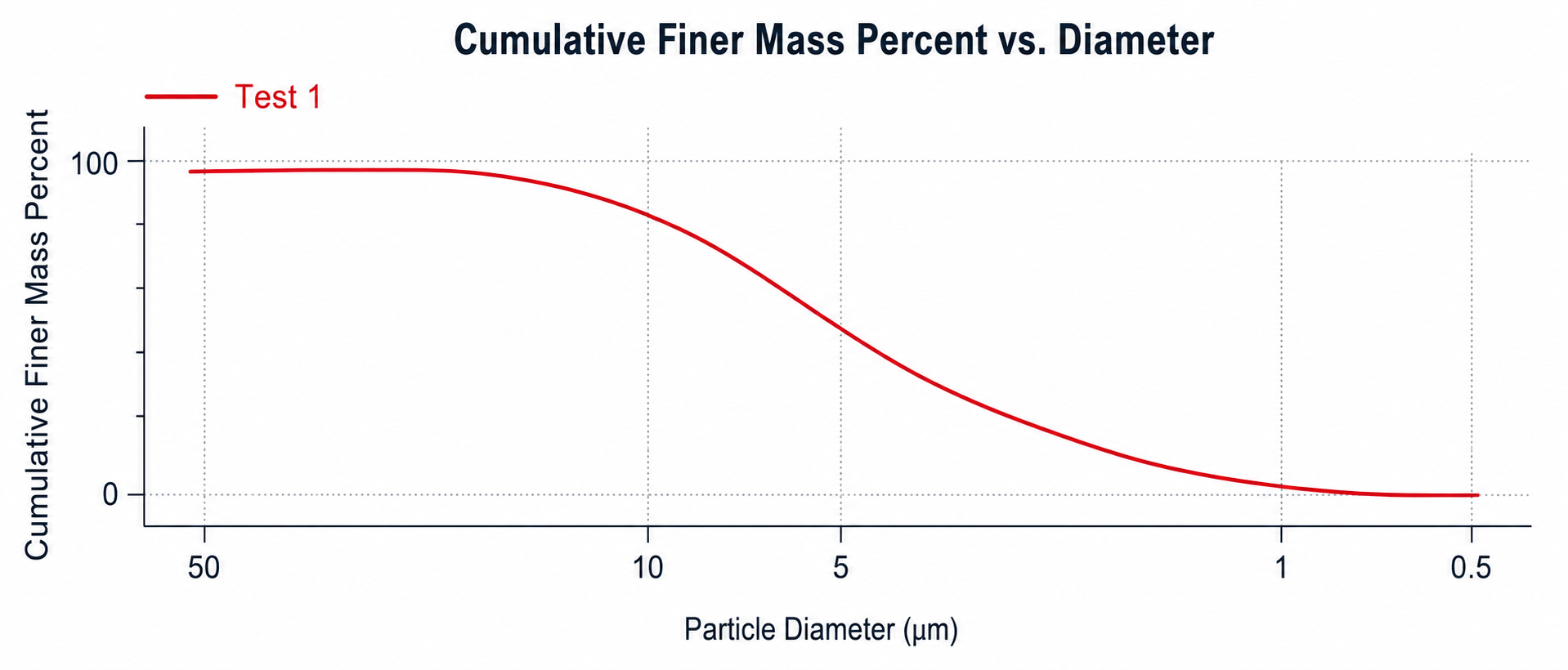
Nominal mesh alone does not fully describe a polymer-grade talc. Particle-size distribution and mineral morphology provide a more useful view of how a grade has been engineered.
SediGraph III particle-size analysis using X-ray monitored gravity sedimentation and Stokes’ law calculation.
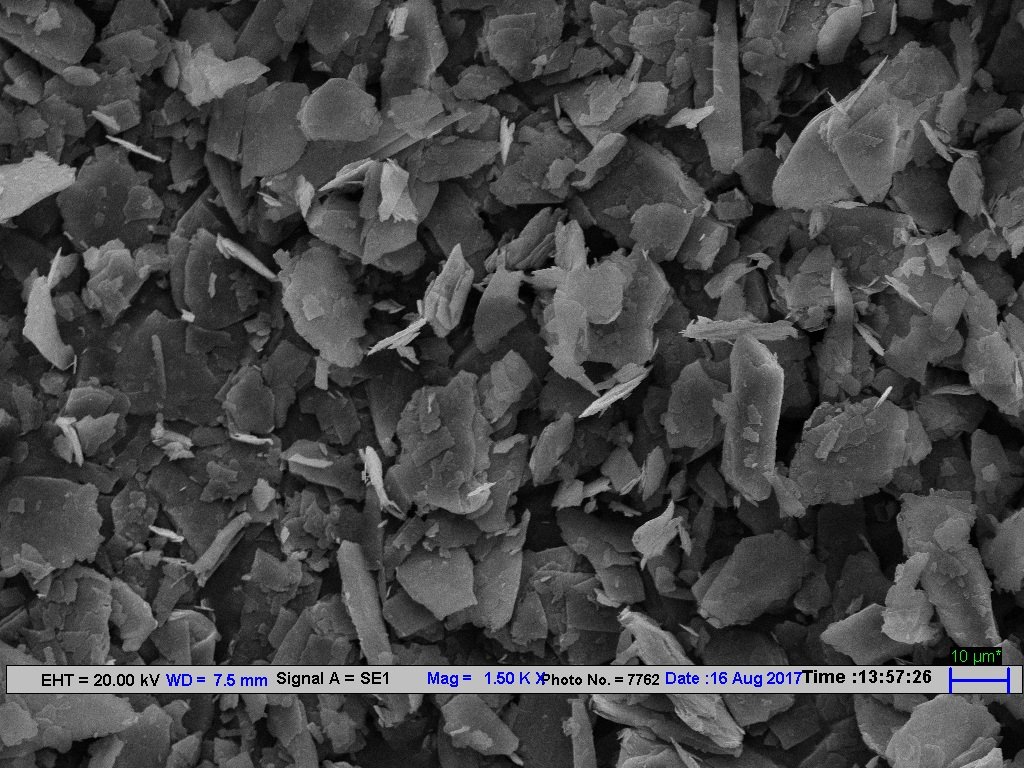
Particle population at lower magnification
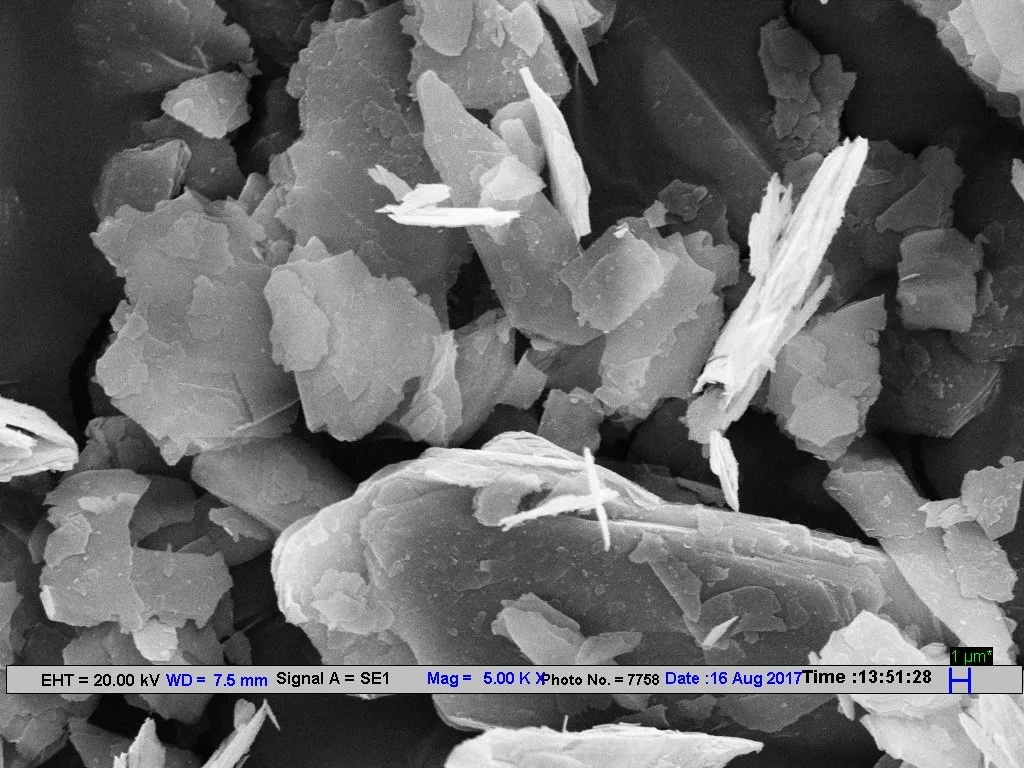
Plate-like mineral morphology at higher magnification
The particle-size curve and values shown are representative results from a talc sample measured by SediGraph. They are not a contractual product specification; values may vary by product and batch and may not be directly comparable with results obtained using other particle-size measurement methods.
PACKAGING & EXPORT LOGISTICS
Packed for the route.
Planned for the destination.
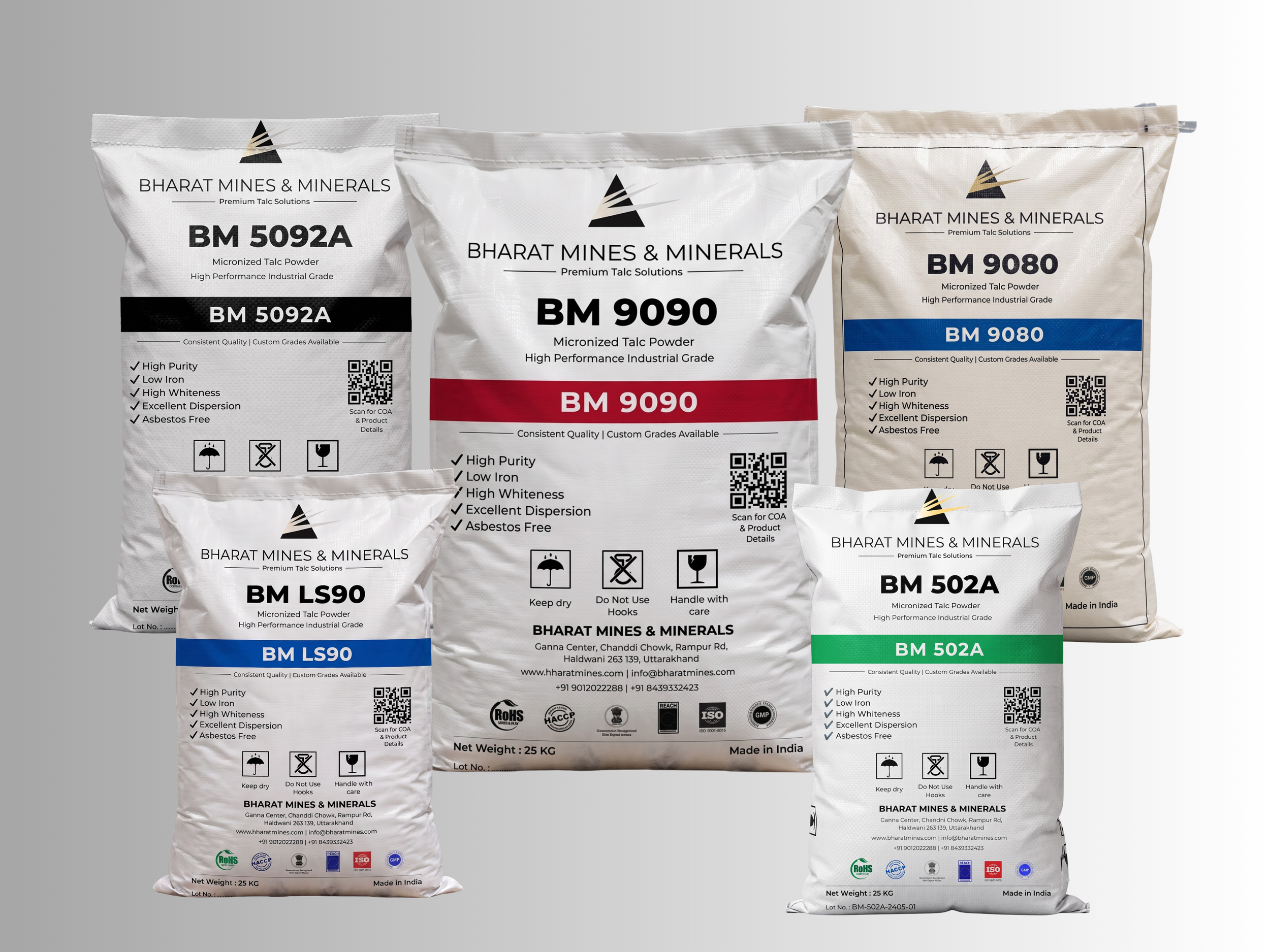
Packaging and container planning are confirmed against the destination, route and discharge requirements.
Bag options
25 kg and 50 kg HDPE bags.

Jumbo bags
Typically 1000–1200 kg.

Shipment basis
MOQ is generally one truck or container load; capacity varies by destination and loading method.

Loading & ports
Bagged or loose container loading and bulk shipment through Mundra, Pipavav or another suitable major Indian port.
COMMON QUESTIONS
Before you request a grade.
-
Talc is used as a reinforcing mineral to increase stiffness and support dimensional and thermal performance. Its contribution depends on particle morphology, loading, dispersion, resin type and formulation design.
-
No. Talc commonly increases stiffness, but its influence on impact depends on grade, loading, resin and the impact-modifier system. The stiffness–impact balance must be verified through controlled compound testing.
-
No. Excessive fineness can increase processing difficulty or formulation cost without proportional improvement in the finished part. Particle-size distribution, morphology and dispersion are more useful than mesh size alone.
-
Yes, subject to formulation trials. Talc can support stiffness and dimensional consistency in recycled or blended PP, but variation in the recyclate must be considered.
-
Share the PP type, melt-flow index, current mineral grade, target loading, processing method, finished application and required mechanical, thermal and appearance properties.
What should your talc help you achieve?
START A TECHNICAL CONVERSATION
Share your application, current specification, target properties, approximate requirement and destination. Our team will review the information and recommend the appropriate next step.
Product selection · Technical data · Samples · Domestic supply · Export enquiries
SALES & TECHNICAL ENQUIRIES
Ganna Center, Chandni Chowk, Rampur Rd, Haldwani 263 139,
Uttarakhand