

Functional mineral.
Engineered for polymers.
POLYMER GRADE TALC
Lamellar talc grades developed for filler masterbatch, polypropylene compounds and engineered automotive plastics.
Filler Masterbatch · PP Compounds · Automotive Plastics
Lamellar
Mineral morphology
Controlled PSD
Processing consistency
PP-Focused
Application-led selection
Documented
COA · TDS · SDS support
More than mineral loading.
Performance in the system.
THE BMM APPROACH
A polymer grade is not defined by fineness alone. Mineral character, lamellarity, particle-size distribution and dispersion behaviour all influence the result.
We begin with the application and the compounder’s target. This helps us align source selection and processing with stiffness, dimensional behaviour, surface requirements and production consistency.
POLYMER APPLICATIONS
One mineral platform.
Three production contexts.
Start with where the talc enters your system. We can then discuss the grade characteristics that matter at that stage.
Filler Masterbatch
Talc grades selected for high mineral loading, dependable dispersion and consistent downstream dilution.
Explore Filler Masterbatch →PP Compounds
Lamellar talc for polypropylene systems where stiffness, shrinkage control and processing consistency matter.
Explore PP Compounds →Automotive Plastics
Application-led mineral selection for compounded parts requiring a considered balance of mechanical and dimensional performance.
Explore Automotive Plastics →PERFORMANCE TARGETS
Choose the grade around
what the compound must do.
The correct starting grade depends on the polymer, formulation, loading, processing conditions and required balance of properties.
Stiffness
Platy mineral morphology can support modulus development in reinforced polypropylene systems.
Dimensional stability
Grade selection considers shrinkage, warpage and the dimensional targets of the moulded part.
Processing consistency
Controlled particle-size distribution and mineral sourcing support dependable compounding behaviour.
Surface & finish
Optical properties, dispersion and particle profile are aligned with the intended appearance.
Performance depends on the complete formulation and process. Final grade selection should be confirmed by customer evaluation.
PARTICLE ENGINEERING
Measured distribution. Visible morphology.
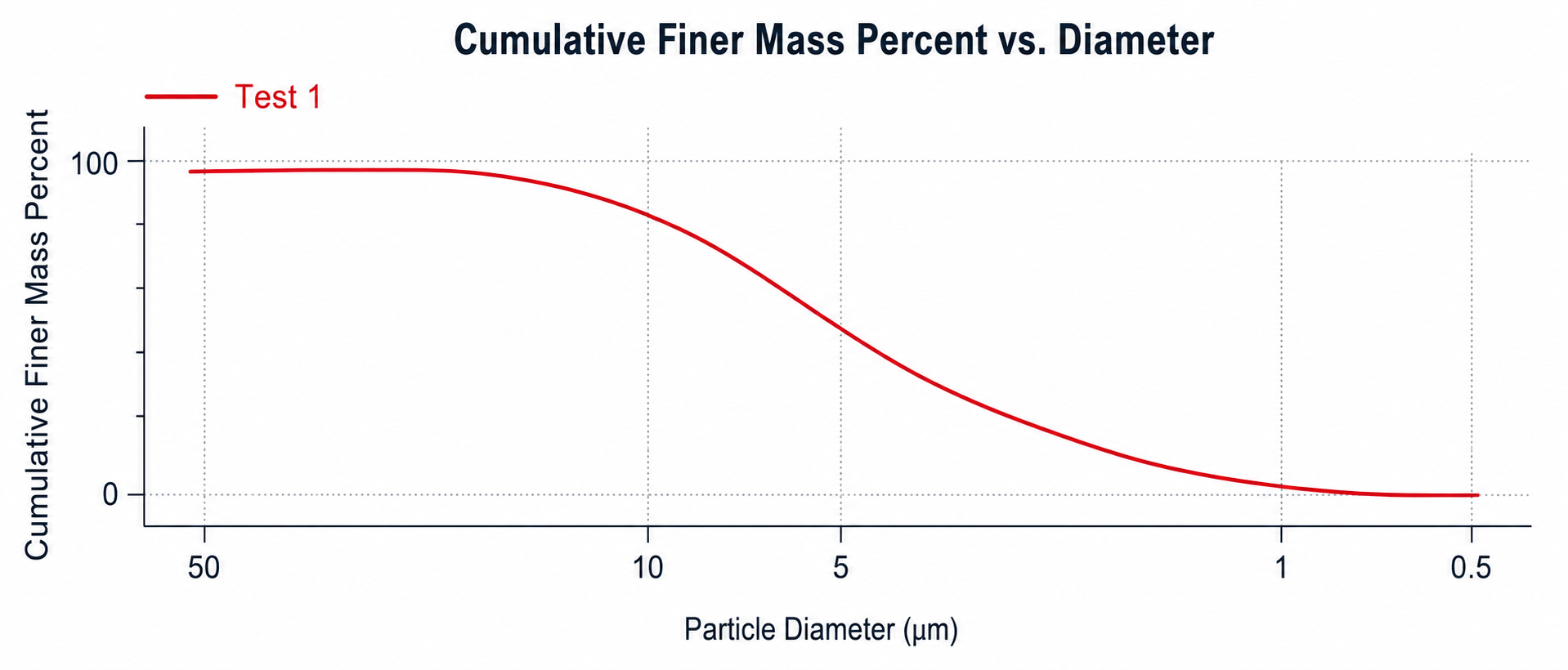
Nominal mesh alone does not fully describe a polymer-grade talc. Particle-size distribution and mineral morphology provide a more useful view of how a grade has been engineered.
SediGraph III particle-size analysis using X-ray monitored gravity sedimentation and Stokes’ law calculation.
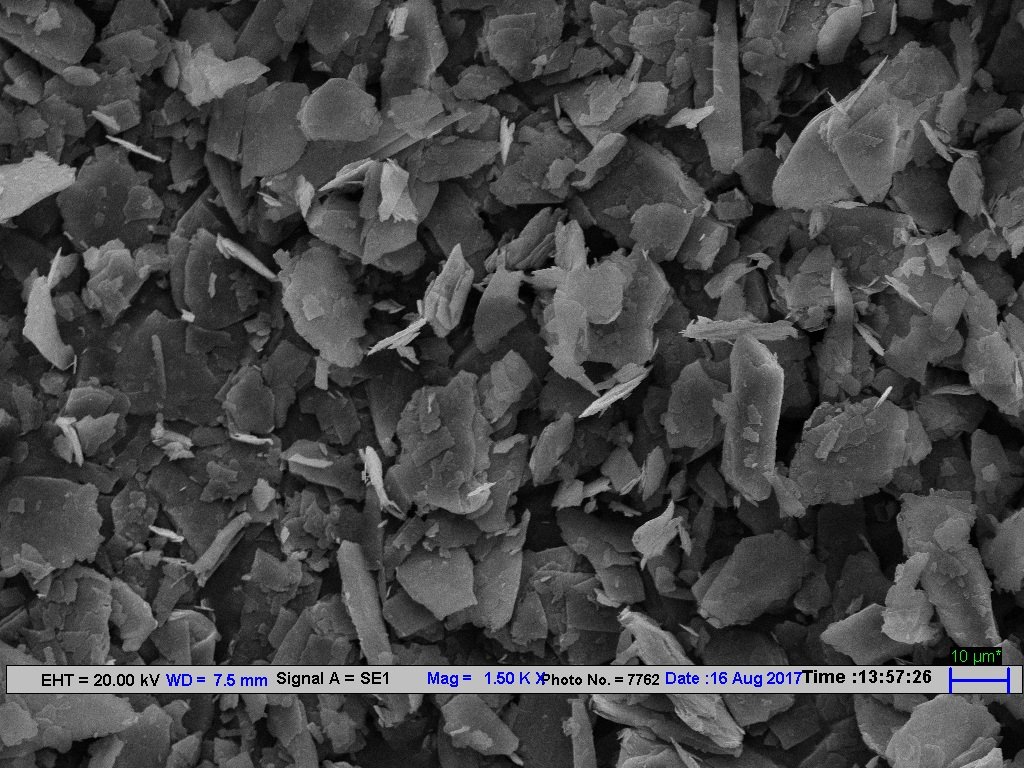
Particle population at lower magnification
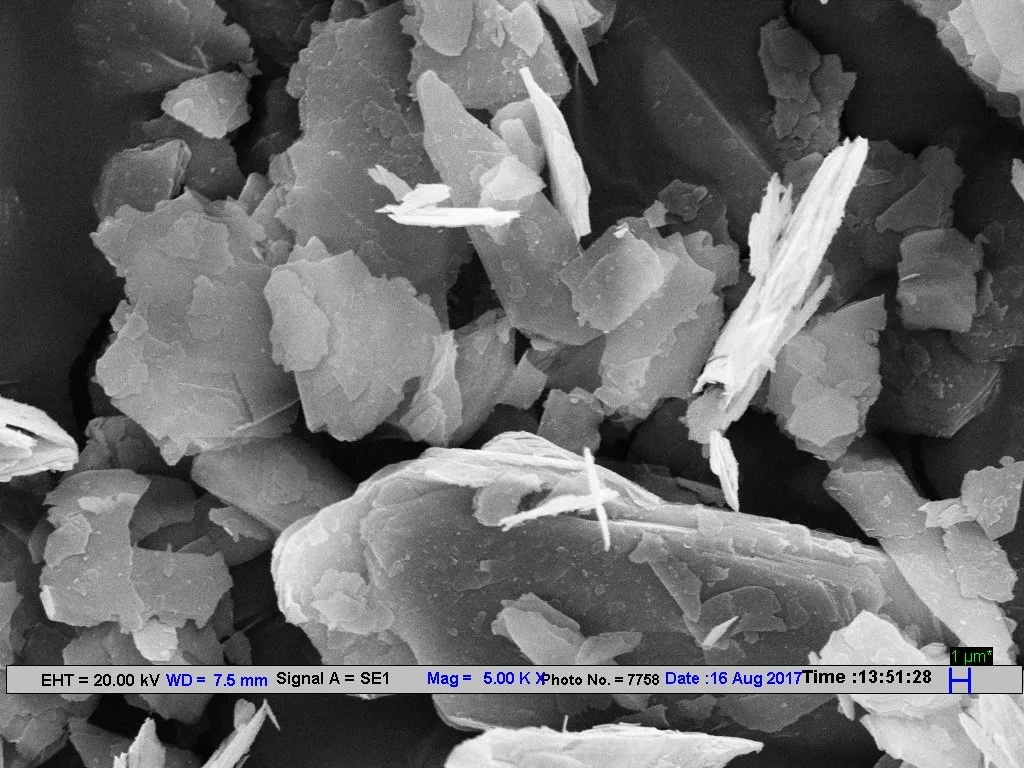
Plate-like mineral morphology at higher magnification
The particle-size curve and values shown are representative results from a talc sample measured by SediGraph. They are not a contractual product specification; values may vary by product and batch and may not be directly comparable with results obtained using other particle-size measurement methods.
SOURCE TO SPECIFICATION
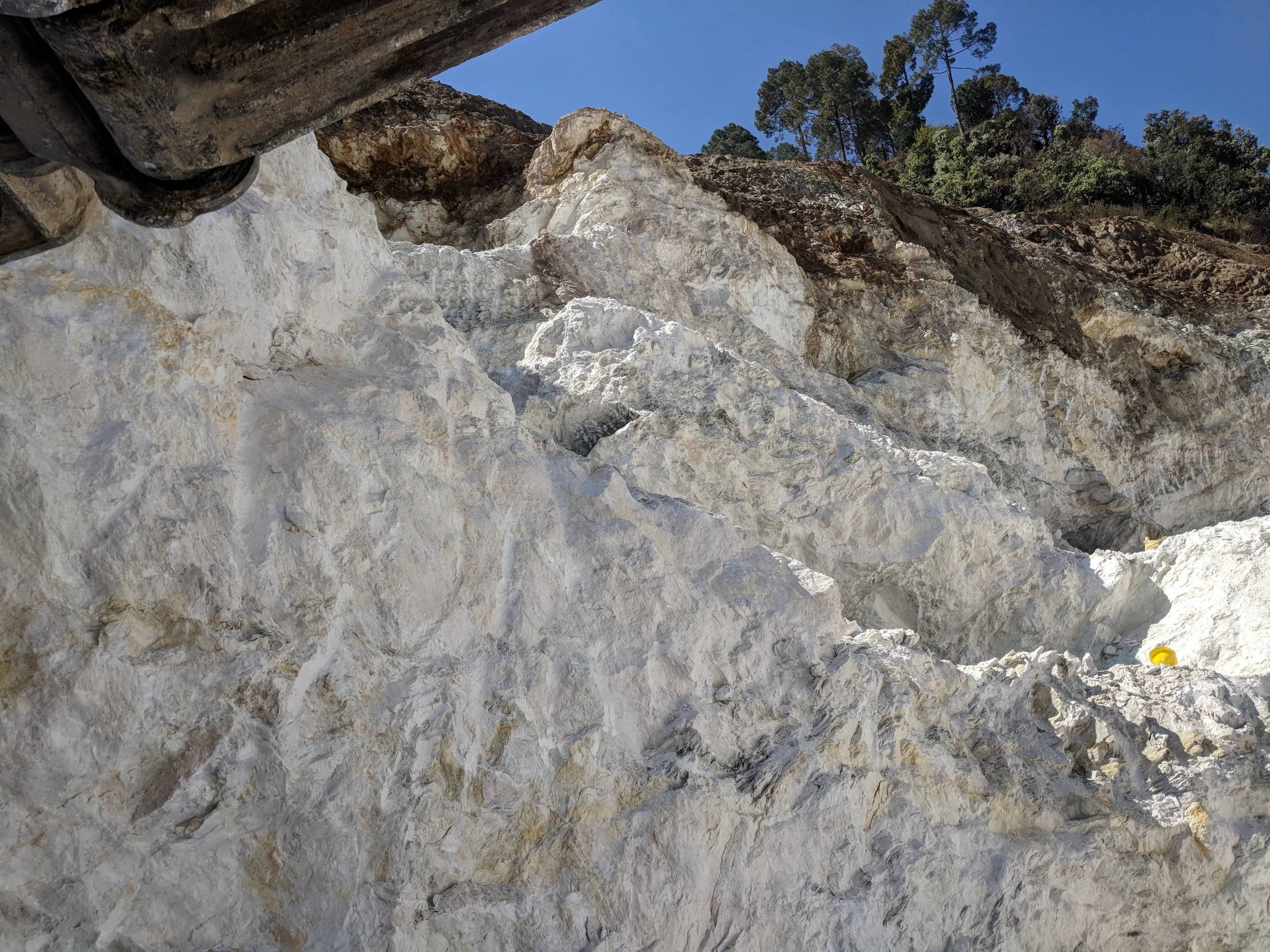
UTTARAKHAND / INDIA
Consistency begins before micronisation.
Control over the mineral source gives grade development a dependable starting point.
01
Share the polymer, loading level, process, current grade and the performance result you need.
Application first
02
We consider morphology, optical properties and raw-material consistency—not mesh alone.
Mineral character
03
Micronisation and classification are aligned with dispersion and processing requirements.
Particle engineering
04
Shortlisted grades should be validated in your formulation before commercial adoption.
Evaluation
TECHNICAL & COMMERCIAL SUPPORT
From shortlist
to supply.
Share your application and specification. Our team can support grade discussion, sample evaluation, documentation, packaging and supply planning.
Grade discussion
Review the polymer, loading, process and target properties.
Samples & evaluation
Shortlist candidate grades for customer-side formulation trials.
Documentation
Product specifications, TDS, SDS and batch-specific COA support.
Supply planning
Suitable packaging with domestic dispatch and export coordination.
COMMON QUESTIONS
Before you request a grade.
-
Tell us the polymer system, application, current filler or grade, loading level, processing method, target properties, approximate monthly requirement and destination.
-
Yes. Grade selection can be discussed around mineral loading, dispersion, dilution behaviour and the requirements of the finished compound.
-
We can shortlist a starting grade from your formulation and performance targets. Final selection should be confirmed through customer trials in the intended compound and part.
-
Product specifications, TDS, SDS and batch-specific COA support can be discussed for the selected commercial grade.
START A TECHNICAL CONVERSATION
What should your
polymer compound achieve?
Share your polymer, loading level, process, target properties, approximate requirement and destination.